
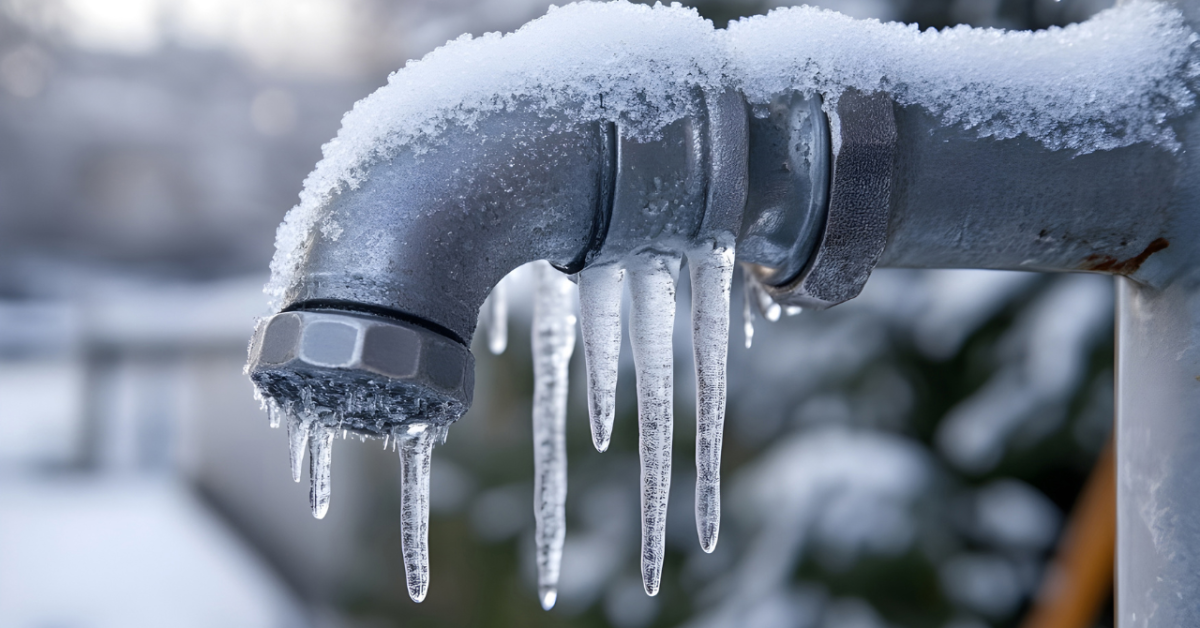
October is the last comfortable month to get outside and do jobs around the house. The evenings are drawing in, the heating is going back on, and somewhere in the next few weeks the first proper frost will arrive, usually overnight and usually without warning.
For most homes that frost is harmless. For homes with exposed pipes, a dripping outside tap or a stopcock nobody has touched in ten years, it is the start of the most expensive water problem of the year.
Why Pipes Burst in the Thaw, Not the Freeze
Water expands as it freezes. Inside a pipe, that ice builds pressure against the walls and splits them, but the split usually stays sealed while the ice is solid. The damage only shows when the temperature rises and the ice melts, releasing water through the crack, often into a loft, a ceiling void or behind a kitchen unit.
That is why burst pipes so often go unnoticed until there is a stain on the ceiling. By then the water has had hours to spread.
The Pipes Most at Risk
- Loft pipes and tanks. The loft is the coldest part of most houses, especially if it is well insulated underneath, which keeps the heat in the rooms and out of the roof space.
- Garages, outbuildings and utility rooms. Anywhere unheated with a water supply running through it.
- Outside taps. The most exposed fitting on the property, and the one most likely to be left full of water all winter.
- Your boiler's condensate pipe. On a condensing boiler, the small plastic pipe carrying waste water outside can freeze and shut the boiler down on the coldest morning of the year.
Your October Checklist
- Find your stopcock and test it. It is usually under the kitchen sink, but not always. Make sure it turns. A seized stopcock in a flood is a very bad discovery.
- Lag exposed pipes. Foam pipe insulation is cheap, quick to fit and available at any DIY shop. Prioritise the loft, garage and anything running along an external wall.
- Isolate and drain outside taps. Turn off the internal isolation valve if you have one, open the outside tap to drain it, and fit an insulated tap cover.
- Fix drips now. A dripping tap or overflow is wasting water today and can freeze and block in a cold snap.
- Keep the heating ticking over. If you are going away, leave the heating on low rather than off. Many insurers expect this as a condition of cover in winter.
- Check your water butt. If you set up rainwater harvesting last month, leave some space at the top so freezing water has room to expand, and keep the overflow flowing away from walls.
If a Pipe Does Burst
Turn off the water at the stopcock straight away. Open your cold taps to drain the system, switch off any electrics near the leak if it is safe to do so, and call a plumber and your insurer. If a pipe is frozen but has not split, thaw it slowly with a hot water bottle or hairdryer. Never use a naked flame.
For a fuller winter checklist, the Consumer Council for Water (CCW) publishes free, independent advice on preparing your home for cold weather.
Building a new home or converting a building into one next year? Get your Part G Water Efficiency Certificate in 60 seconds for £25.
Posted In:Water Useage,
Recent Posts
- Before the First Frost: How to Winter-Proof Your Pipes This October
- Catch the Autumn Rain: Why September Is the Right Month to Set Up Rainwater Harvesting
- Designing for Drought: Why Modern Construction Demands Smarter Water Planning
- July Heatwaves & Hosepipe Bans: How to Protect Your Household Water Budget
- The Self-Builder’s Guide to Passing Part G on the First Attempt
- Beating the Summer Squeeze: How to Prepare Your Property for Seasonal Water Restrictions
- Landlord Checklist: Why Water Efficiency is Your Secret Weapon for Better Yields
- Smart Garden Design: How to Meet Part G While Creating Beautiful Outdoor Spaces
- April Shower Savings: High-Performance Without the Waste
- The Future Homes Standard is Here: What It Means for Your Water Strategy